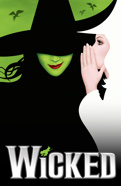
Jenna Bainbridge Is Changing the Industry for the Better as Nessarose in Wicked on Broadway


(Photo by Sergio Villarini for Broadway.com)
When the 2024 Wicked film adaptation cast actress Marissa Bode as Nessarose, she became the first disabled actress to portray the role in the history of the production. On March 4, 2025, Jenna Bainbridge joined the Broadway musical as Nessarose. An ambulatory wheelchair user—meaning she walks and uses a wheelchair as needed—Bainbridge marked the milestone onstage more than 21 years after Wicked first opened at the Gershwin Theatre in October 2003. The actor, singer and disability rights advocate invited Broadway.com Editor-in-Chief Paul Wontorek and The Broadway Show into her home in Westchester, New York, as well as on her drive to work at the Gershwin. Along the way, she spoke candidly about when she sustained her disability, the indisputable power of representation on stage and her continued work to foster open dialogue about accessibility in theater and in all spaces. "Access is a universal need," she stresses.
In 2024, Bainbridge made her Broadway debut in Suffs, becoming the first wheelchair user to originate a role in a new musical on Broadway. Speaking of her time at the Music Box Theatre and now at the Gershwin, she admits it's surprising how comfortable she is amid the excitement. "It feels like home. It feels like such a good place to be every night, and so much of that is the companies I've gotten to work with. It's just the best people on Broadway in both of those buildings, and it's been really incredible how much I've felt included in the companies. These shows are so important, and getting to tell these stories to audience members every night is a gift I could have never imagined for myself, but I'm so grateful."
While it may feel like the authentic casting of Nessarose on Broadway was a long time coming, Bainbridge approaches the conversation from a place of understanding rather than impatience. "Our rhetoric as a society about what it means to be disabled, or what it means to use a wheelchair, is pretty limited," she says. "If you don't have someone teaching you and telling you, 'Here's how we can become more accessible and more inclusive,' you don't even know to ask. You don't even know what possibilities are out there." She explains that while the reality is frustrating, it isn't surprising. "I think there's a fear sometimes about talking about accessibility, but when you can have an open dialogue, you're able to actually meet someone where they are." Joining the company of Wicked and having the opportunity to participate in an open discussion about what accessibility looks like for her is a promising start.

"During my very first audition, I said, 'Hi, my name is Jenna. I am a wheelchair user. I'm able to walk.' I walked during my audition, and I said, 'If you have any questions about this, about what my access needs might be, I'm very excited to have that conversation.'" In Bainbridge's case, stairs aren't necessarily a problem. Rather, it's an issue of stamina. The dressing room for Nessarose has traditionally been upstairs, meaning walking up two flights of stairs for every costume change. "That's a lot for my body. But by moving me down to the ground floor, that's something I can do sustainably. It was a really easy conversation once we were able to have it, but it also was complicated because it meant that for 20 years, this has been one person's dressing room, and all of the dressers are used to going to that room, and all of the sound crew and the stage managers, the whole show. It was a conversation of how do we make this flow, and I think we found a really nice balance."
Now it's up to everyone to keep up the momentum. "Whoever comes to Wicked next—in any part, it doesn't matter what part it is—the next performer who comes to Wicked with access needs is going to need different things," she acknowledges. "Each individual is going to have different access needs, and that's true whether you have a disability or not. We all have things that we need to do our jobs well."
"I love my disability. My disability has led me to every beautiful thing in my life." —Jenna Bainbridge
Onstage, Bainbridge had only one moment she felt needed to be shifted: the curtain call. "Any curtain call on Broadway, you're watching people run to their spot, bow quickly, and run away. And I don't run. That is not something my legs do." She asked to do the curtain call in her personal wheelchair, and was told absolutely. "It started off as an access need, but I also find it really beautiful for the storytelling, because I think it also tells the audience I am a member of this community," she says. "Because that's when we take off our masks. We literally have people in Wicked who wear masks during the show, and they come off in curtain call. For me, it's a moment of showing my disability in plain sight."

Of course, Bainbridge isn't one to shy away from discussing her disability—far from it. "My entire lived memory I've had my disability, so I don't find it to be a negative part of me. I love my disability. My disability has led me to every beautiful thing in my life." Sharing the story of how she sustained her disability, Bainbridge says: "When I was 16 months old, I was running around my living room. I was a very active kid, and I just tripped and fell, something that toddlers do a million times a day. When I fell, I hit my head on a coffee table and then ricocheted and hit my legs on the couch."
At first, she was quadriplegic—completely paralyzed from the chest down. She could move her shoulders and thumbs. "It was quite a slow recovery process after that. As the swelling went down from the injury, I regained some mobility, so I became paraplegic, and then over time, regained more feeling and movement," she continues. "But they've never been able to figure out what happened. They don't know if it was some kind of autoimmune something that caused me to fall, and it actually was that my disability caused the fall, or if the fall caused my disability." For Bainbridge, though, at this point in her life it isn't important that she have a diagnosis. "I don't need to know why I have a disability, I just need to know that it exists and I accommodate for it."
As an actor, Bainbridge loves that she gets to play such a range within one character, as Nessa goes through a significant transformation over the course of the show. But it's her keen observation about the often-misunderstood character that really drives Bainbridge's ethos home. "Act One Nessa is very excited and optimistic. The world of Oz, much like our own world, goes through some rather extreme hardships. And that really changes people. I think it's important to return to that Act One optimism, because you can make a lot of change in the world if you're willing to fight for it."
She hopes that in time, more representation leads to more acceptance and understanding around disability. If there's anything she doesn't like about her disability, she points out, it's the way other people treat her for it. "People assume things about me, and assume things about every disabled person. But disability is a natural and beautiful part of life, and it will happen to everybody. Everybody will experience disability. It might happen to your loved ones, it might happen to your parents, to your spouse, to your children, and it might also happen to you," she continues. "Disability is not something we should be scared of. It's something we should plan for, because it is inevitable, and it is a human rite of passage to experience disability. So I don't think it's negative. I don't need to know why I have a disability. What I need to do is make sure that the world becomes more accessible because of my disability."

It was from this desire that Bainbridge and her husband Paul Behrhorst launched their business, ConsultAbility in 2022. "It was something we'd already been doing," she explains. "Especially as an actor with a disability, I was always having to advocate for myself. Anytime I would go into a new theater, I would be doing a lot of unpaid labor, telling people how to make their spaces more accessible. Not just for me, but my goal was always to make it more accessible for every single person who came after me." As for Behrhorst, "his job was to make sure that each space became accessible for every single artist who entered it. So he was doing this work from behind the scenes and I was doing it on stage."
Married for 10 years, the two first met at Phamaly Theatre Company in Denver, Colorado, where Bainbridge got her training and Behrhorst worked as a stage manager. The company exclusively features actors with disabilities. "I was able to see adults with disabilities living their lives, and that was something I hadn't seen before," she says of the pivotal experience. She was able to observe how other performers asked for accommodations, learned choreography when they couldn't do the physical steps or accommodated choreography for just the upper body. "I learned all of those tools at Phamaly, and then started auditioning for more productions in the area. I started doing dinner theater and regional theater, and eventually decided I wanted to get a degree in theater."
Before moving to New York, the couple often used their lived experiences and combined industry expertise to answer questions over social media, but "wanted more people to know that they could ask for this type of assistance." ConsultAbility is now a nonprofit organization where "people can reach out to us and ask us to come to their spaces. We also do direct outreach." The scope of their work ranges from providing onsite analysis and action plans to trainings and workshops that demonstrate the real-life application of accessibility in community spaces.
Despite all of these accomplishments, it's difficult for Bainbridge to sum up just how much it means to provide others with the representation she didn't have growing up. "Every single night there are people at the show who have disabilities who tell me how important it is for them to feel represented on that stage, and that maybe they haven't ever felt that before. They've never seen themselves in these stories." And she understands. "I didn't think I would go into this profession because I'd never seen anybody like me do it. I'd never seen anybody [like me] be successful in this industry, and that's starting to change. Kids are coming to Wicked and feeling seen." And we do believe that this change for the better is because of Bainbridge's work for good.
Watch the full interview below.
Get tickets to Wicked!